

Adeel
Principal Solution Architect
Sets service boundaries, data ownership and failure modes before code starts. Reviews the decisions that are expensive to undo.
- Architecture
- Azure
- .NET
.NET & ASP.NET
.NET isn’t something we added to the list. It’s what we’re best at. Some of our team wrote their first .NET code when Web Forms and ViewState were the height of fashion.
They’ve come along for every version since, picking up Microsoft certifications along the way.
So however your stack has grown, the chances are they’ve watched it grow up too.
Web · Mobile · Desktop · Cloud
Products and brands we have built








See what fits
Faster than writing a brief, and you keep the answer whether or not you talk to us.
What we are asked for
Most briefs that reach us are one of these seven. If yours is a mix of three, that is normal and it is usually the same engineers either way.
Power Apps and Power Automate over Dataverse, for the processes that live in spreadsheets and inboxes. Built to hand over, not to leave you dependent on us.
Teams, Exchange and the tenancy underneath, configured so permissions and retention survive an audit rather than being tidied up before one.
Retrieval over your own documents, agents that act inside your systems, and the evaluation work that shows whether an answer is right before a customer sees it.
ASP.NET Core and Blazor for applications that carry real load, plus the unglamorous parts: auth, background jobs, reporting and a deployment you can repeat.
WPF and WinForms, usually the line-of-business application everything depends on. Kept alive, moved onto current .NET, or replaced a screen at a time.
.NET MAUI from one C# codebase out to iOS and Android, including offline behaviour and the platform-specific parts a shared codebase cannot avoid.
Document and matter management that people actually use: structure, metadata, versioning and search, rather than a drive with folders in it.
Tell us which of the seven you need and we will put the engineer who actually does it on the call, not an account manager.
Get a free consultationIndustries
Not sectors we would be willing to learn on your budget. Each of these has a working solution behind it, built for the regulations and the workflow the trade actually runs on.

Multi-site diaries, recalls that nobody has time to work, and patient records under HIPAA or the Australian Privacy Principles.
See the solution
Bay scheduling, digital job cards and quote approvals from the workshop floor while the car is still on the hoist.
See the solution
Clinical notes, consent and referrals across practitioners, with an audit trail that holds up on every record change.
See the solution
Matter and document management on SharePoint, with retention and access control a partner can actually explain.
See the solution
Enrolment, timetabling and parent communication, usually over Microsoft 365 a school already pays for.
See the solution
Rostering against care plans, visit verification and the reporting a regulator asks for rather than the reporting that is easy.
See the solutionOutside these six we have shipped in aquaculture and agtech, automotive AI, and for SaaS startups building their first product. Thefull portfolio has the case studies.
Experience
Most teams need more than one level at the same time: a lead to run delivery, one or two senior engineers on the hard parts, a mid-level engineer shipping features, and an architect where the design is decided. The bands meet at their edges on purpose, because the difference between a strong senior engineer and a new lead is rarely a birthday.
The team
Not a database of profiles we would go and recruit against your brief. These are the engineers already here, in the timezones they are actually in.
Adeel
Principal Solution Architect
Sets service boundaries, data ownership and failure modes before code starts. Reviews the decisions that are expensive to undo.

Fatima
Lead .NET Engineer
Runs delivery for a .NET team and takes the hardest parts herself. Owns the standards the rest of the code is held to.

Jaseem
Product Owner
Turns a rough brief into a build order: what ships first, what waits, what gets dropped. US hours for demos.

Mazy
Senior .NET Engineer
Senior ASP.NET Core and the data layer under it. The engineer for work that has to hold up under load.
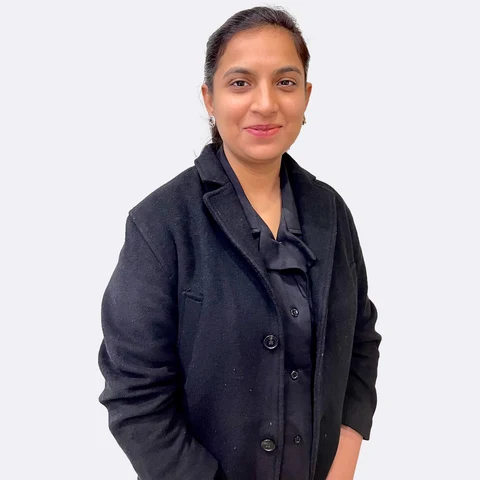
Kanwal
Azure Data Scientist
Takes models out of notebooks and into production on Azure ML, with retraining and drift monitoring in place.

Faraz
Azure DevOps Engineer
Owns the path from commit to production: pipelines, environments, infrastructure as code, and a rollback that is tested.

Kamran
Microsoft 365 Engineer
Microsoft 365 and SharePoint as a working system: document structures, audit-safe permissions, Power Platform over the top.

Farheen
.NET MAUI Engineer
One C# codebase out to iOS and Android in .NET MAUI, including the platform-specific parts you cannot share.

Umair
.NET MAUI Engineer
Cross-platform .NET MAUI, with attention to startup time, offline behaviour and how it copes with a bad connection.

Anamta
Quality Engineer
Test strategy and automation, not just bug reports. Builds the regression suite that lets the team ship weekly.

Nazia
Associate .NET Engineer
Feature work in C# and .NET on an established codebase, reviewed by a senior engineer before it merges.

Arslan
Technical Program Manager
Keeps a multi-timezone delivery honest: scope, dependencies, and what is genuinely blocked rather than merely late.

Khurram
Technology Manager
Delivery contact for Asia-Pacific, in your working hours. Translates between the business need and the build.

Hassan
Azure AI Engineer
Builds AI into .NET systems on Azure: retrieval over your own data, grounded answers, and evaluation that proves it works.
AI-assisted development
The repetitive parts of a build move much faster than they used to: boilerplate, data access, tests, the long tail of a framework migration. That is where we use these tools, and it is why a piece of work that used to take a fortnight can take a week.
What has not changed is who is responsible. Every line an assistant writes is reviewed by the engineer whose name is on the work, the same as any other code. We will also tell you where AI helped, if you ask.
A short call, no obligation. We will tell you honestly whether we are the right fit.
Award-winning leadership

Dubai · May 2024
Aquacon Invest Champion 2024
Our engineers built an AI computer vision system for aquaculture: cameras watching live fish farms, estimating biomass and spotting disease in real time. Not a lab demo. It runs in salt spray and shifting light, on stock that never holds still, and it held up well enough to beat an international field in Dubai.


The trophy is not really the point. The point is that the same engineers are still here, and getting computer vision to work in conditions that break most models is the identical problem you have when you put AI into production. That is what the award is evidence of.
The product has since spun out as Aquavyon.
Portfolio

A large-scale business directory for local visibility and growth.
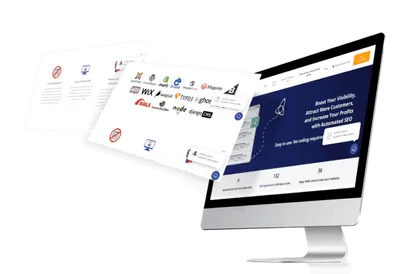
An AI platform that ranks websites and writes optimized content.

AI voice agents that check in on elderly patients, by phone, in plain conversation.
Thirteen case studies in the full portfolio.
How we work together
You already run projects a certain way. We join that rather than asking your team to learn ours.
Agile
Two-week sprints, planning and review. For a roadmap still moving.
Best for: Evolving scope
Kanban
A prioritised queue, no fixed ceremony. For work that reshuffles weekly.
Best for: Shifting priorities
Fixed
Agreed scope, milestones and price. For a known finish line.
Best for: Known scope
Yours
Your board, your ceremonies, your definition of done. We join it.
Best for: Existing process
What clients say about the team
Adeel and his team contributed to our project in an amazing way, bringing their expertise and skills to help us deliver our project in record time and quality. Today, the fully functional tool is in use by our customers and gaining traction internationally.
 Peter ZellerFounder, Urbanblue GmbH
PanaceaLogics provided us a complete core development team that took care of all aspects of our cloud-based technology stack, development, testing, deployment, hosting, while we focused on product management and client relationships.
 Pascal RodCo-Founder, Avea Life AG
The best technical journey I had. Loved all those people I worked with. Thanks a lot.
 Andrew CapelDragonfly Solutions
A reliable developer and collaborator. He is excellent with execution, while keeping an eye on and an understanding of the larger goals of the project and the stakes behind technical decisions.
 Chuck MitchelsHeartline
Questions
Engineers on the team hold current Microsoft role-based certifications, mostly in Azure development, solution architecture, and Power Platform and Dynamics. A certification proves someone knows the platform properly. It does not prove they can design a system that lasts, which is why we point you at the portfolio as well. We will tell you who is certified and in what before you commit to anything.
Because of where the engineering sits, not because of who the engineers are. Our core team is in Pakistan, with a United States point of contact and an Australian presence for client work. That is the whole reason the number is what it is. It is not junior people with a senior label, and it is not a rate that quietly rises once you are committed. If a low rate makes you suspicious, that is a reasonable instinct, which is why the first week carries no risk: if you are not happy with the work, it is not charged.
The engineer, and the things that make an engineer useful: code review, tests, standups, and the handover notes that mean your team can maintain what was built. There is no separate project management line, no onboarding fee and no charge for the time we spend understanding your codebase. You pay for hours worked on your work.
Usually a mix of levels rather than one. A typical team is a delivery lead, one or two senior engineers and a mid-level engineer, with an architect involved while the design is being set. Experience runs from about two years at mid-level to fifteen for an architect. We name the actual people and their experience in the plan rather than calling them resources.
Either. Some clients embed our engineers into their own team and standups; others hand over an outcome and want us to run delivery. The engineering is the same, but the plan is written differently, so tell us which you want on the first call.
Our core engineering team is in Pakistan, with a United States point of contact and phone line for new projects and account matters, plus an Australian presence. That onshore-relationship, offshore-delivery model is how we keep senior engineering at a competitive rate, and we are direct about it rather than implying a local team.
Most of our work is exactly that: systems already in production that cannot stop while they change. We start by reading the code and running it, then give you an honest read on whether to extend, refactor or replace. We have recommended all three, including where that meant less work for us.
Two answers, because assigned and started are different things. We name and brief an engineer within 48 hours, and they can pick up the trial week straight away. Moving on to a full engagement usually takes one to two weeks for a mid or senior engineer and longer for an architect or a full team, because we are pulling them off other work rather than pretending everyone is idle. The written availability we send you is the real date, not an assumed one.
Global presence
A US contact for the relationship, client operations in Australia, and the certified engineering hub that does the building.

US Contact
Client & sales contact
First contact for new projects and enquiries
+1 832 838 4955
Client operations
Sydney
Regional delivery & client relationships

Engineering hub
Islamabad
Certified core engineering team
Free consultation
Tell us what you are working on and we will put you in front of the people who would actually do the work, a senior engineer or an architect depending on what you need. Bring a codebase, an architecture question, or just a rough idea. We will come back within one business day to arrange a time. No cost, no obligation, and if we think you do not need us we will say so.
Building mobile as well? See our .NET MAUI development page.
PanaceaLogics
Typically replies within an hour
Hi there! 👋 How can we help with your project?
Start chat on WhatsApp